Thought Leadership
The Big 5: What the African Savanna Can Teach UK SME Founders About Scaling
21 July 2026 · Calvin Sellers
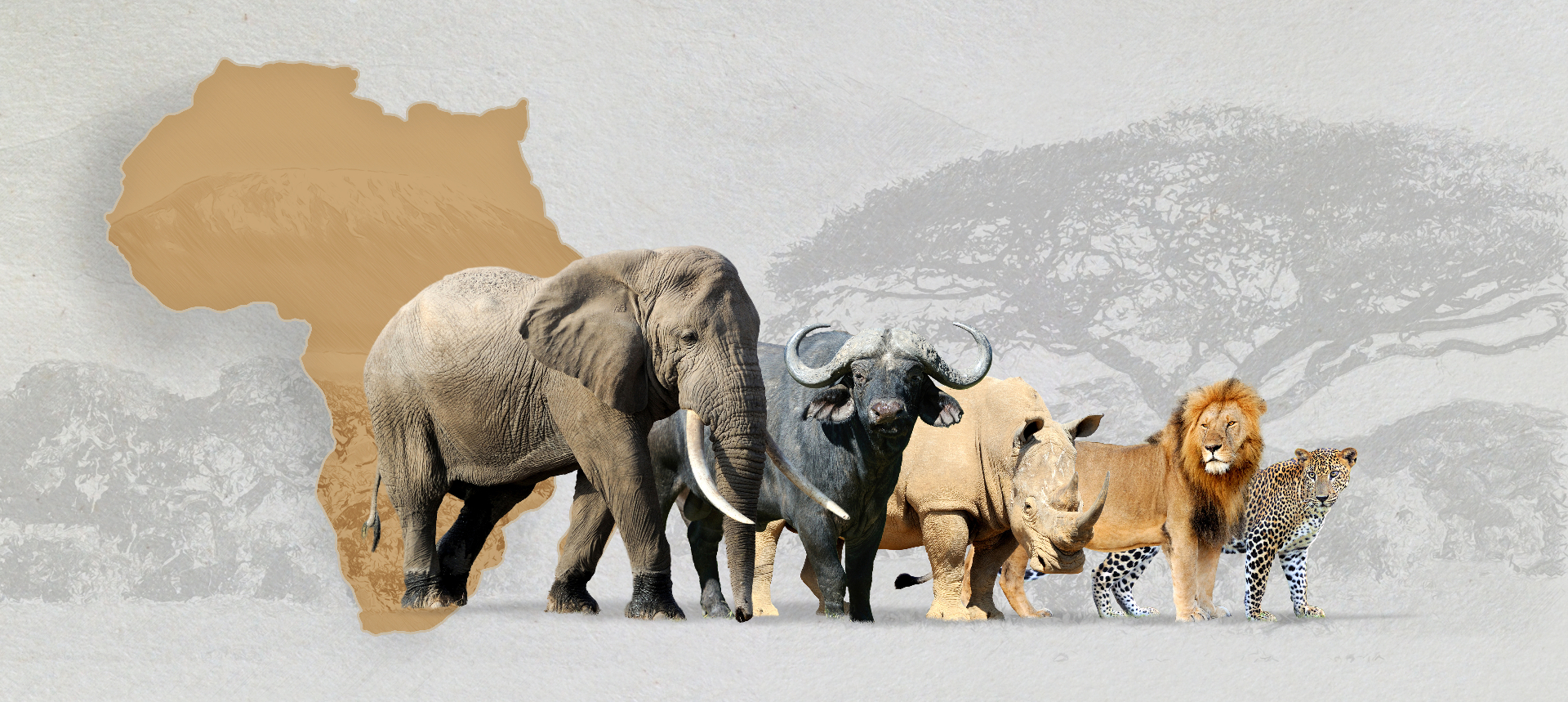
As a fractional CFO working closely with incredible UK SME founders and leadership teams, I have learned one universal truth: dry financial jargon often goes in one ear and out the other. But nature offers a masterclass in business strategy and helps bring those ideas to life.
Recently, our small but perfectly formed CFO consultancy (www.collectiveco.ai) recorded a video podcast unpacking the scaling challenges we see every single day. Drawing on over 90 years of combined experience, we realised that the entrepreneurial journey perfectly mirrors the "Big 5" African safari animals.
View and listen to the full podcast on YouTube here, where you will also find bite-sized episodes on each animal.
Here are 5 punchy comparisons and critical learnings for each animal to help you navigate the wild landscape of scaling an SME.
I gently challenge you to identify which of the Big 5 animals best represents the current phase or challenges of your business. Are you a scaling Lion Pride, or are you battling the Buffalo herd mentality?
1. The Lion: Growing the Pride (Scaling & Leadership)
1. The "Bigger Kill" Imperative
A small pride can survive on small prey, but as your headcount grows, so must your target market. A £1k client win cannot sustain a 50-person business. Your pricing and margins must scale with your size.
2. The Founder Bottleneck
If every kill (deal) or decision still routes through you, you are the ceiling on your own growth. What got you here will not get you there - there being your definition of what success looks like.
3. Pride vs. Pride
You must actively separate the 'pride' of your talented team from your own personal 'ego' (pride). You have to step back and trust your team to hunt without you.
4. Roaring Across the Savanna
Lions communicate clearly across vast distances. As your team spreads across different locations or remote working models, clear, confident leadership communication becomes non-negotiable.
5. Protecting the Territory (Cash is King)
Lions fiercely guard their hunting grounds. Similarly, a growing SME must aggressively monitor its cash runway and working capital to sustain the larger pride during lean seasons.
2. The Buffalo: The Herd (Culture & Risk)
1. The HiPPO Effect
Herds are prone to groupthink. If the Highest Paid Person's Opinion (HiPPO) always leads the meeting, your team stops thinking independently. Great leaders listen first and speak last.
2. Paralysis on the Horizon
Buffalo will sometimes freeze and watch approaching lions instead of acting. Do not be the business that watches market shifts, AI disruption, or tax changes coming and does nothing.
3. Psychological Safety
To avoid herd mentality trampling good ideas, build a culture where a junior team member can safely say, "This might be a dumb idea, but..."
4. Strength in the Collective
The true power of a business lies in collective protection, mentoring and upskilling the next generation of leaders, just as a herd protects its young.
5. Diversifying the Herd
A single disease can wipe out an entire herd. From a CFO perspective, over-concentration in one sector or relying heavily on a single client or supplier is a fatal risk. Diversify your risk profile.
3. The Elephant: The Ecosystem (Balance & Blindspots)
1. The "Elephant in the Room"
Unaddressed problems, whether it is a toxic high-performer or a failing product line, fester quietly, then suddenly become the most expensive item in the room. Confront them early.
2. Ecosystem Imbalance
A massive elephant can destroy a small habitat. Over-reliance on one giant client can throw your entire operational and financial ecosystem out of balance if they pull their business.
3. Institutional Memory
Elephants never forget. This is great for retaining knowledge, but toxic when it calcifies into, "We do not do it that way because it failed three years ago."
4. The "Musth" Danger
Male elephants make erratic, aggressive decisions when hormonal. Founders must avoid making major financial or strategic decisions in a highly reactive or emotional state.
5. The Heavy Burn Rate
An elephant needs 300 pounds of food daily just to exist. Keep an eye on your fixed overheads and running costs; if your operational "calorie" needs are too high, a lean cash-flow month could be disastrous.
4. The Rhino: The "Chubby Unicorn" (Vision & Execution)
1. Perfection is the Enemy of Progress
Stop chasing the mythical "unicorn" (the perfect hire, the flawless product). The rhino (the chubby unicorn) proves an 80% ready solution launched today beats a 100% solution that never launches.
2. Myopic Vision
Rhinos have terrible eyesight and charge at what is immediately in front of them. Do not sacrifice your long-term strategic forecasting for short-term reactive firefighting.
3. Redefining Success
You do not need a $1Bn "unicorn" valuation to win. Define your own North Star, whether that is sustainable profitability, a lifestyle business, or an eventual exit. Clarify what success looks like.
4. Thick Skin
Founders need the armour of a rhino. Not every pitch will win (Roger Federer won just 54% of his career points but is still a legend - see podcast!). Process, and learn from, failure quickly and keep moving forward.
5. Unstoppable Momentum
Once a rhino is charging, it is incredibly hard to stop. Build operational momentum so that your business pushes through market friction with sheer force of execution.
5. The Leopard: The Solitary Hunter (Strategy & Efficiency)
1. The Strategic Retreat
Leopards will often abandon a kill rather than risk a fight with a pack of hyenas. Knowing when to walk away from a toxic client, a bad deal, or a price war race to the bottom shows strong strategic leadership.
2. Key-Person Vulnerability
An injured solo leopard starves. If your business relies entirely on one rainmaker or technical genius, you have massive key-person risk.
3. Protecting Your Wins
Leopards drag their food up trees to secure it. When you win a major client or create valuable IP, immediately secure and ring-fence that value against competitors.
4. Calculated ROI on Energy
A leopard does not waste energy chasing prey it cannot catch. Know your Customer Acquisition Cost (CAC) and only hunt where the Lifetime Value (LTV) justifies the sprint.
5. Operating in the Shadows
You do not need the loudest PR machine to dominate your market. Sometimes, the most profitable, cash-generative SMEs are the ones quietly and ruthlessly executing out of sight.
Over to you: drop your thoughts in the comments below. I would love to hear them.
Even better - reach out for a chat. If we are able to meet in person, the coffee / beer is on me!
#FractionalCFO #SMEBusiness #UKFounders #Leadership #BusinessStrategy #ThoughtLeadership #Entrepreneurship