Thought Leadership
Most of Your KPIs Are Lying to You
2 October 2026 · Calvin Sellers
Here’s an uncomfortable question we put to ourselves: if every single KPI on your dashboard is green right now, are you actually winning, or have you just stopped keeping score of what truly matters?
That’s the provocation behind our latest podcast at The Collective, where Kelly Jepp, Kim Stokes and I pull apart one of the most misunderstood tools in business: the humble KPI.
Our argument is simple. Most businesses have a clarity problem dressed up as a KPI problem. Fifty-six metrics on a dashboard isn’t rigour, it’s noise. You cash in the bank amount can be a dangerous KPI. If you can’t say what action you’d take when a number moves, it isn’t a KPI. Bin it. Measure the signals, not the noise, and act on them.
We borrowed some of our ideas from elite sport
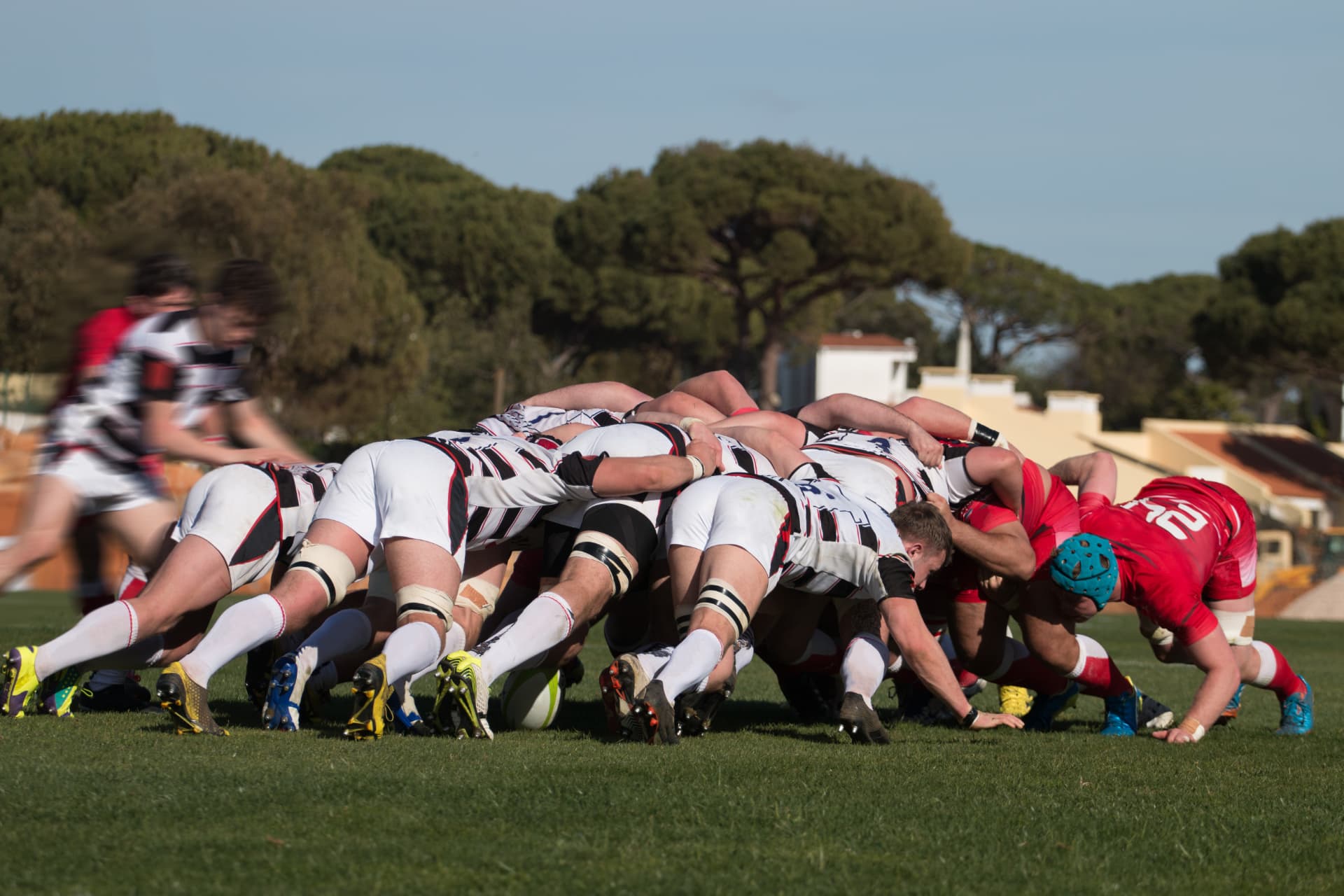
Every idea in this episode has a sporting mirror. No international rugby team walks onto the pitch just hoping. They’ve dissected performance down to sleep, diet and scrum weight before they’ve laced up their boots. They have a scrum coach, an attacking coach, a defensive coach, a kicking coach, each running their own metrics, while the head coach watches only the handful that decide the match or build for the season ahead.
Most SMEs don’t have that discipline. They either run blind, chasing a single revenue or bank balance number like it’s the whole game, or they drown their leadership team in 56 indicators nobody at board level needs to see. Elite sport solved this decades ago: key metrics at the top table, performance metrics owned by the specialists underneath. We think business should also take this approach.
Stop driving through the rear-view mirror
One idea we explore in the episode is the split between lag and lead indicators, and why we think many entrepreneurial SMEs get the balance backwards.
Lag indicators (revenue, profit, last month’s bank balance) are the final score. Useful for the post-match review and gathering learnings. Useless for changing the outcome as that match is over. Lead indicators (pipeline coverage, conversion rates, cash runway, sales cycle length) are the half-time team talk: the moment you can still change tactics and shift the result. To mix the metaphors, they’re your steering wheel or accelerator, not your rear-view mirror.
Our take: if your board pack is 90% lag, you’re not coaching the team. You’re reading match reports after full time.
Revenue is vanity. Profit is sanity. Cash is reality.
Chasing top-line growth without knowing your cash conversion is how healthy-looking businesses go bust, and we come back to LEGO’s near-collapse in the early 2000s, when it drowned itself in 12,000 SKUs while chasing revenue, as the cautionary tale. The fix wasn’t a better dashboard. It was ruthless simplification and a hard rule we’d urge on any owner: cash first, then profit, then revenue.
The real KPI number: 6 to 10, not 56
Our rule of thumb of no more than six to ten KPIs at any level of the business isn’t arbitrary. Fewer than that and you’re overexposed to one or two metrics which may only paint part of the picture. More than that and your eye is spread too thin, same as a head coach trying to personally track every player’s individual stats mid-match instead of trusting the specialists around them. Everything else is a performance indicator, not a key one, and belongs one level down with the team driving it.
Two things we’d push further next time
We covered a lot of ground, but two things nagged at us afterwards:
- A green dashboard can be a red flag. We touched on this, but it deserves more airtime: if nothing’s ever amber or red, you’re not being measured, you’re being comforted. Elite teams actively hunt for the weakness in their game, even after a win. Most businesses only go looking once something’s already broken.
- The team talk is the missing KPI. We talked a lot about what to measure, but not enough about the ritual around it, the equivalent of the Monday debrief or the half-time team talk. A KPI nobody discusses in a room, out loud, on a set cadence, isn’t driving behaviour. It’s just sitting on a slide.
Listen to the full conversation: sporting analogies, boardroom war stories and all, on YouTube, and follow us for the next instalment in the series.